Child Development
Boost Fine Motor Skills with Guided Play
Growing Bright Minds3 min read
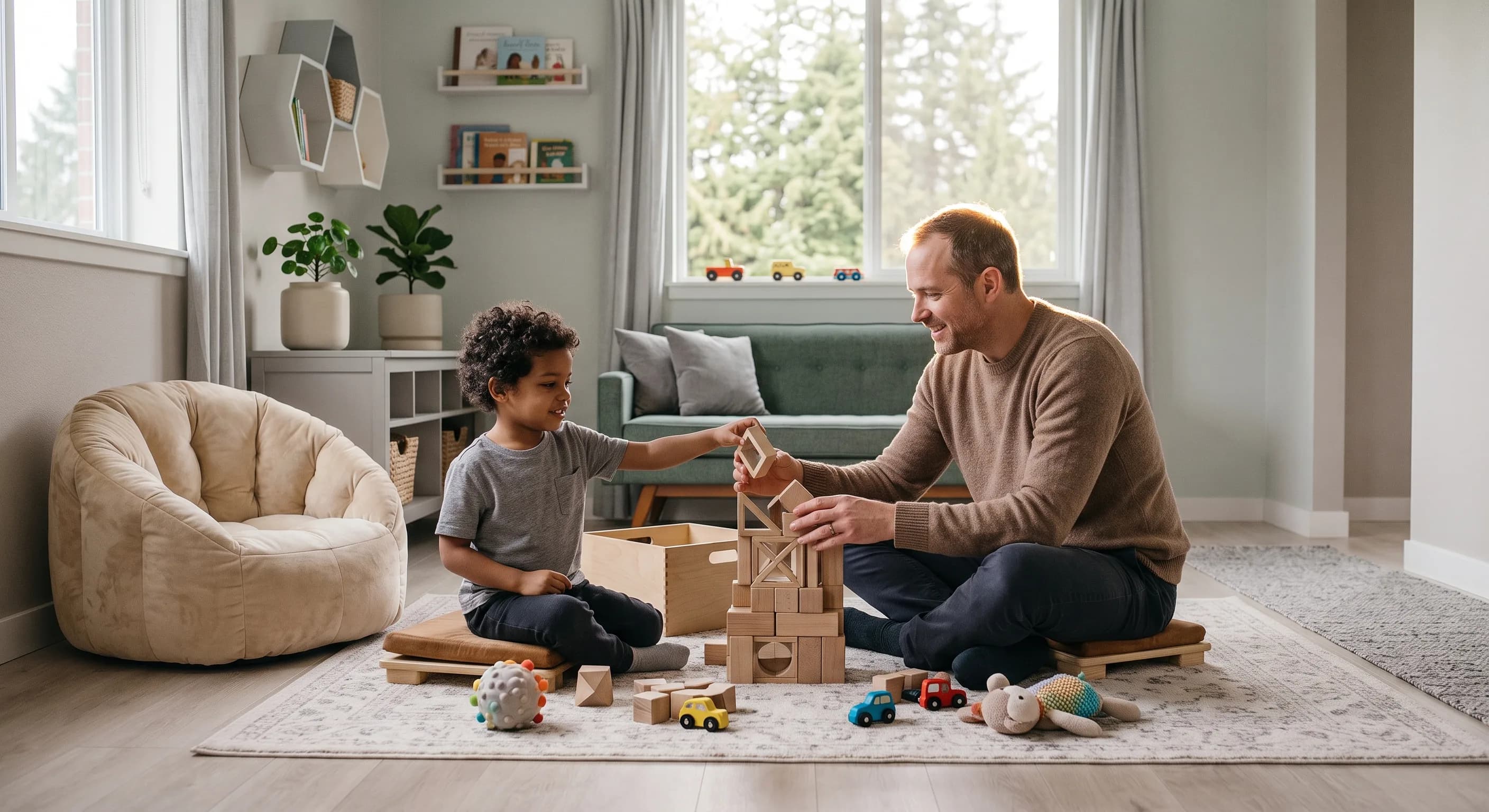
Learn how guided play can significantly improve your child's fine motor skills through fun and engaging activities.
Have you ever watched your child struggle to tie their shoelaces or hold a pencil correctly? These tasks rely heavily on fine motor skills, which can be nurtured through guided play. By integrating fun and subtle guidance, you can help your child strengthen these essential abilities while they play.
Imagine your child playing with building blocks while their teacher subtly guides them to explore different shapes and structures. This scenario showcases guided play, a powerful blend of child-led activity with adult support that enhances learning.
What is Guided Play?
Guided play is a form of play where children are in charge, but adults provide subtle direction to enrich the learning experience. Unlike free play, where kids explore on their own, guided play involves an adult who sets up an environment conducive to exploration and learning. For example, in a classroom setting, a teacher might introduce specific materials or ask open-ended questions to guide the child's play towards a learning goal.
Why Use Guided Play?
Guided play is beneficial because it combines the natural enjoyment of play with targeted learning objectives. When adults engage in guided play, they help children develop essential skills without the rigidity of traditional instruction. This approach supports social, emotional, and cognitive development, allowing children to practice problem-solving and critical thinking. The adult's role is to facilitate rather than direct, ensuring that the child remains an active participant in their learning journey.
Simple Examples of Guided Play
Guided play can be seamlessly integrated into both home and classroom environments. At home, you might encourage your child to create a story using their favorite toys, asking questions to expand their imagination and narrative skills. In a classroom, a teacher might use a sandbox to teach concepts of volume and measurement, guiding children to use different tools and discuss their observations. These activities highlight how guided play can be both fun and educational.
By encouraging exploration, asking questions, and introducing new ideas, adults can transform ordinary play into a rich learning experience. Explore the Montessori Sensory Activities to see how sensory play can also be guided effectively.
Making the Most of Guided Play
To make guided play effective, follow your child's lead while introducing new challenges. Create a safe space where they feel free to experiment and express themselves. This approach not only enhances their learning but also fosters a love for discovery.
Guided play bridges the gap between play and structured learning, ensuring that your child develops crucial skills in a joyful and engaging manner. Embrace this method to support your child's growth and development.
Guided play offers a unique way to blend the best of both worlds—learning and play. By being actively involved in your child's playtime, you can help them discover new concepts and develop essential skills. Encourage exploration and be part of their learning journey.
Linking Guided Play with Other Play Types
Guided play can be seamlessly connected with other types of play to enhance your child's learning experiences. For example, integrating quiet play activities can help children focus and develop concentration skills. Combining these with guided play provides a comprehensive approach to learning.
Similarly, physical play can boost gross motor skills, while guided play encourages imagination and problem-solving. By mixing these play styles, children can enjoy a balanced development journey, ensuring they grow both physically and mentally.
To further explore enhancing your child's learning through play, consider reading our articles on Quiet Play Activities for Focus and Concentration and Montessori Sensory Activities: Key Benefits. These resources offer additional insights into supporting your child's development.
Frequently Asked Questions
What is guided play?+
Guided play is a child-led activity where adults provide subtle direction to enhance learning, combining play and educational objectives.
How does guided play benefit children?+
Guided play supports cognitive, social, and emotional development by combining fun with learning, fostering problem-solving and critical thinking.
How can guided play improve fine motor skills?+
Guided play involves subtle adult guidance during play, which can help children practice and enhance their fine motor skills through engaging activities.
Tags
Join our weekly newsletter
Framework-grounded ideas for parents and educators, every Thursday.