Child Development
Understanding Teacher-Guided Play for Young Learners
Growing Bright Minds3 min read
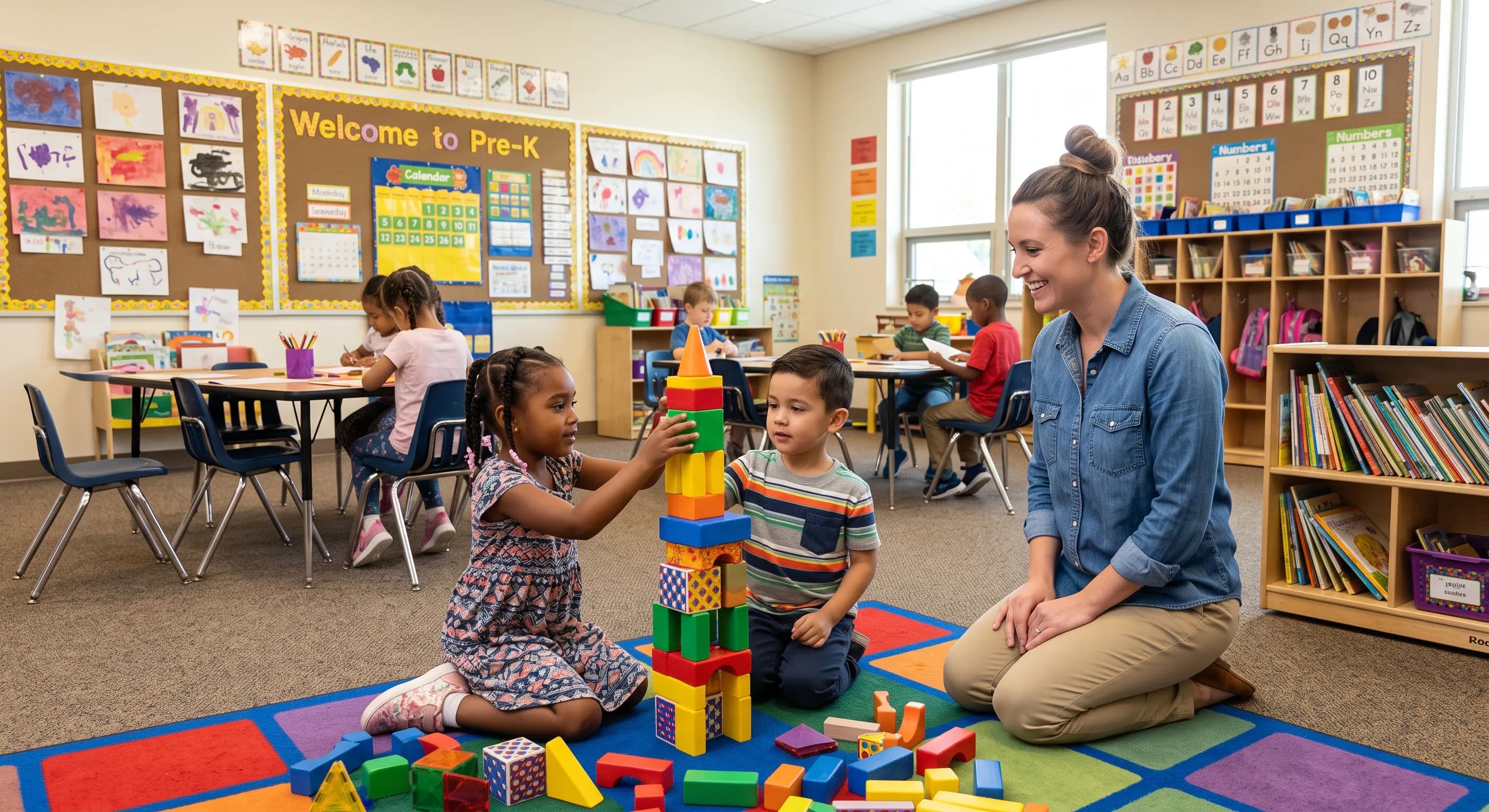
Learn how teacher-guided play enhances early childhood education and prepares children for kindergarten.
Getting your child ready for kindergarten can feel overwhelming. You want them to be prepared academically and socially. One effective way to support this transition is through teacher-guided play.
Picture this: your child is at preschool, deeply immersed in building a tower with colourful blocks. Nearby, a teacher observes, gently guiding the activity with questions and suggestions. This is an example of teacher-guided play, a powerful approach in early childhood education.
What is Teacher-Guided Play?
Teacher-guided play is a middle ground between free play and structured learning. It combines the spontaneity of child-led activities with purposeful guidance from an adult. In this setting, teachers set up environments or activities with specific learning goals in mind. They then participate by asking questions or introducing new challenges, helping children explore and learn within the context of play.
How Does it Differ from Child-Led Play?
In child-led play, children choose their activities and direct their own play. There's little to no adult intervention, allowing kids to explore freely. Teacher-guided play, on the other hand, involves more adult interaction. Teachers might subtly steer play towards educational outcomes, such as counting or problem-solving, without taking away the joy of discovery. This approach helps children build new skills while keeping them active and engaged.
Practical Examples for Parents and Educators
Imagine a classroom with a role-play corner set up as a grocery store. Here, children can practise counting and using money while the teacher models phrases like "How much is this?" or "Do you have change?" This scenario encourages language development, math skills, and social interaction. At home, parents can adapt this by using a play kitchen or setting up a simple shop with toys. By asking questions and proposing scenarios, you can guide your child’s learning through play.
For more ideas on incorporating play into learning, check out our article on Montessori Sensory Activities: Key Benefits.
Benefits of Teacher-Guided Play
Teacher-guided play supports various areas of development. It enhances cognitive skills like problem-solving and critical thinking. Socially, it encourages cooperation and communication as children play together and learn from one another. Emotionally, it builds confidence as children achieve new milestones with gentle guidance. This method is a wonderful way to blend learning goals with the natural joy of play.
Remember, balance is key. While guided play is valuable, it’s essential to allow children plenty of time for free play, where they can explore their interests independently.
In conclusion, teacher-guided play is a valuable tool in early childhood education. It combines the best of both worlds—structured learning and playful discovery—helping children grow in a supportive, nurturing environment.
Encouraging Teacher-Guided Play at Home
Integrating teacher-guided play into home activities can be a wonderful way to extend learning beyond the classroom. Parents can set up simple activities with a focus on specific learning goals, much like teachers do. This could include a treasure hunt to build problem-solving skills or a storytelling session to encourage language development.
Parents should feel empowered to join in, gently guiding their child's play without taking over. This creates an opportunity to connect with your child while also supporting their development in a playful, engaging manner. Remember, the goal is to foster a love of learning through play, rather than making it feel like a chore.
For more ideas on preparing your child for their educational journey, explore our articles on Montessori Sensory Activities: Key Benefits and Boosting Fine Motor Skills in Preschoolers.
Frequently Asked Questions
What is teacher-guided play?+
Teacher-guided play is when an adult guides a child's play to achieve specific learning goals.
How can I use teacher-guided play at home?+
Set up play scenarios with learning goals, like a pretend store, and guide your child with questions and challenges.
How does teacher-guided play support kindergarten readiness?+
Teacher-guided play introduces structured learning goals within play, helping children develop skills crucial for kindergarten, such as problem-solving, social interaction, and basic math concepts.
Tags
Join our weekly newsletter
Framework-grounded ideas for parents and educators, every Thursday.