Education
Montessori Method: History, Philosophy & Techniques
Liliya Taneva5 min read
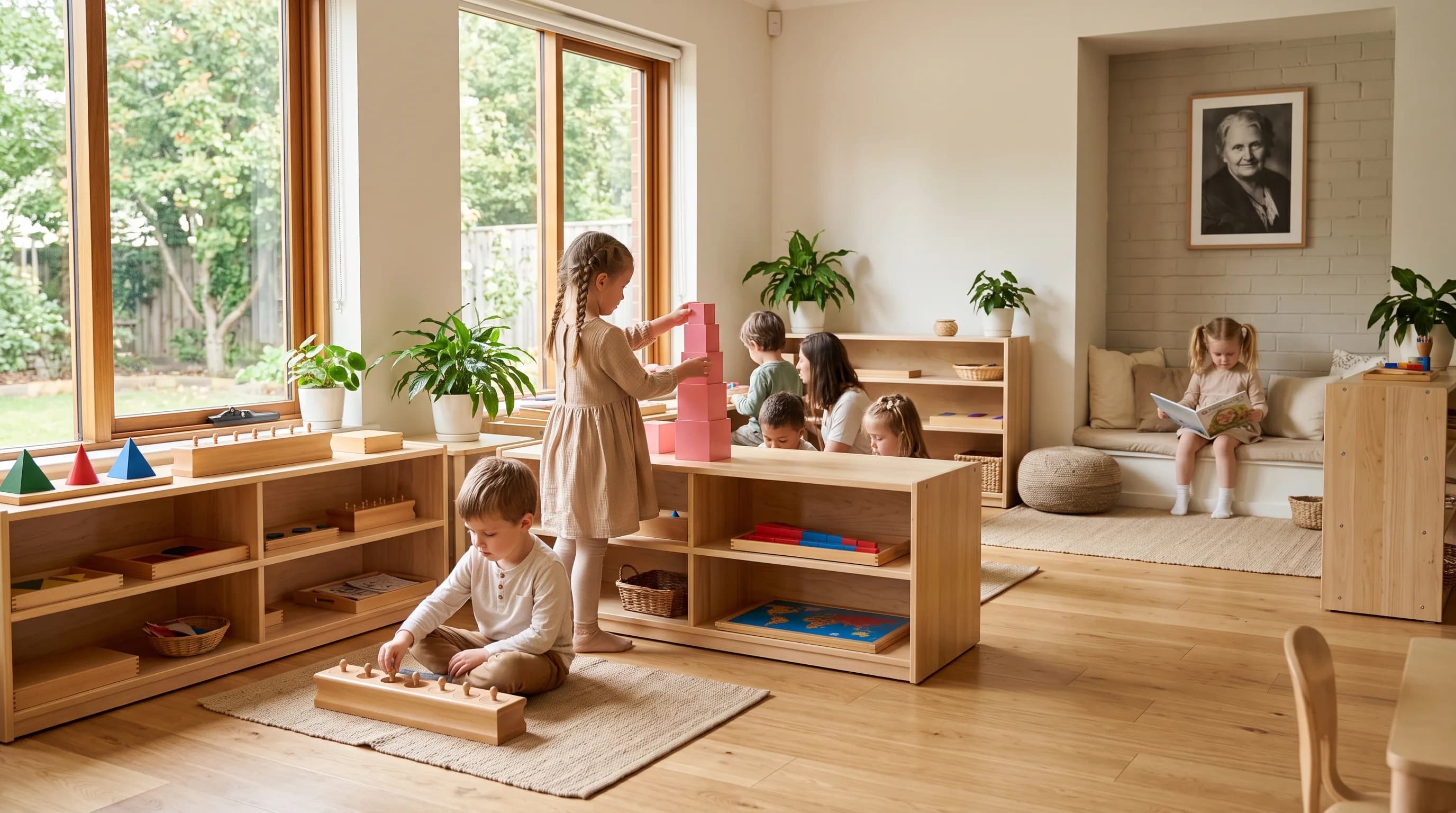
Delve into the Montessori method's rich history and philosophy, and explore its transformative techniques in early childhood education.
In our second blog post on GrowingBrightMinds.com, we will be discovering Montessori in depth. This acclaimed educational approach has been at the forefront of transforming early childhood education for over a century. In this post, we'll journey through the history and philosophy of Montessori, dissect its core principles, shed light on the distinct materials and activities associated with it, and evaluate the benefits and outcomes it brings for young learners.
The Montessori method has transformed early childhood education with its unique approach and principles.
The Montessori method promotes independence and self-confidence in children. It encourages a love for learning and intrinsic motivation. Children develop strong problem-solving and critical thinking skills. The method also fosters social and emotional growth, creating a foundation for lifelong success.
The Montessori method focuses on several key principles:
-
The Prepared Environment: This space supports children's growth by being well-organised and inviting.
-
The Absorbent Mind: Children naturally learn from their surroundings, so educators should provide hands-on activities.
-
Sensitive Periods: These are times when children are especially open to learning certain skills. Recognising these periods helps tailor education.
-
The Role of the Educator: Teachers guide rather than instruct, encouraging self-directed learning.
-
The Importance of Order: Structure and consistency help children feel secure.
Maria Montessori was born on August 31, 1870, in Chiaravalle, Italy. She broke gender barriers by studying engineering and became Italy's first female physician in 1896. Montessori's work with intellectually disabled children sparked her passion for education. She then studied pedagogy, educational psychology, and anthropology.
The Montessori philosophy respects children's natural curiosity and learning drive. It emphasises individualised, child-centred education that nurtures each child's potential. Key elements include:
-
The Prepared Environment: Children learn best in a well-designed space that encourages exploration and independence. This environment features child-sized furniture and carefully chosen materials.
-
The Absorbent Mind: Young children can absorb information from their surroundings. Educators should provide engaging, hands-on learning experiences to harness this curiosity.
-
Sensitive Periods: Children have specific times when they are especially open to learning certain skills. Educators should recognise these periods to support optimal development.
-
The Role of the Educator: Teachers guide and facilitate rather than instruct. They observe each child's needs and interests, promoting self-directed learning.
-
The Importance of Order: A sense of order helps children feel secure and confident. This order is seen in the classroom layout, routines, and behaviour expectations.
History and Philosophy:
-
Maria Montessori's background and her revolutionary ideas: Maria Montessori was born on August 31, 1870, in Chiaravalle, Italy. She broke through traditional gender barriers to study engineering and later became the first female physician in Italy, graduating from the University of Rome in 1896. Montessori's work with intellectually disabled children ignited her passion for education and inspired her to study pedagogy, educational psychology, and anthropology.
-
The Montessori philosophy is rooted in a deep respect for children's innate curiosity and drive for learning. It emphasises the importance of individualised, child-centred education that nurtures each child's unique potential. Key elements of the Montessori philosophy include:
-
The Prepared Environment: Montessori believed that children learn best in a carefully designed environment that encourages exploration, discovery, and independence. A well-prepared Montessori environment features child-sized furniture, carefully selected materials, and a balance between freedom and structure.
-
The Absorbent Mind: Montessori recognised that young children possess an incredible ability to absorb information from their surroundings. She believed that educators should capitalise on this natural curiosity by providing engaging, hands-on learning experiences.
-
Sensitive Periods: Montessori identified specific timeframes, or "sensitive periods", during which children are especially receptive to learning particular skills or concepts. By understanding and recognising these sensitive periods, educators can tailor their approach to support optimal development.
-
The Role of the Educator: In the Montessori approach, teachers act as guides and facilitators rather than traditional instructors. They observe and respond to each child's individual needs, interests, and abilities, promoting self-directed learning and independent problem-solving.
-
The Importance of order: Montessori believed that a sense of order and consistency helps children feel secure and confident in their environment. This sense of order extends to the physical layout of the classroom, daily routines, and clear expectations for behaviour.
-
The first Casa dei Bambini and the expansion of Montessori education worldwide: child-centred, individualised learning, and fostering independence: In 1907, Montessori was given the opportunity to put her educational ideas into practice. She was asked to oversee a childcare centre in the San Lorenzo district of Rome, a low-income area facing social and economic challenges. Montessori seized this chance and opened the first Casa dei Bambini, or "Children's House", on January 6, 1907. Here, she worked with children aged 3 to 6, many of whom came from impoverished backgrounds. Through keen observation and experimentation, Montessori developed her revolutionary educational approach, which quickly gained international attention and acclaim.
Key Principles:
-
The Prepared Environment: creating a space that supports children's development
-
The Absorbent Mind: harnessing the power of a child's natural curiosity and ability to learn
-
Sensitive Periods: focusing on specific areas of development during optimal learning stages
-
The Role of the Educator: guiding rather than instructing and encouraging self-directed learning
-
The Importance of Order: providing structure and consistency to help children feel secure
Montessori Materials and Activities:
-
The importance of hands-on learning
-
Sensorial materials: developing the senses and refining perception
-
Practical life activities: nurturing independence, concentration, and coordination
-
Language and literacy materials: fostering early reading and writing skills
-
Mathematics materials: building a strong foundation for numeracy
-
Cultural materials: introducing children to the arts, sciences, geography, and history
Benefits and Outcomes:
-
Promoting independence and self-confidence
-
Encouraging a love for learning and intrinsic motivation
-
Developing strong problem-solving and critical-thinking skills
-
Fostering social and emotional growth
-
Creating a foundation for lifelong success
For parents interested in integrating Montessori principles at home, our Montessori Home Ideas for Child-Centred Growth article offers practical tips.
In conclusion, discovering Montessori uncovers a method with a deep-rooted history and a distinct philosophy that presents a vibrant and impactful avenue to cultivate young minds. By integrating its fundamental principles and employing Montessori resources and activities, we pave the way for an immersive learning space that encourages independence, sparks curiosity, and instils a passion for learning in kids. Keep an eye on our "Little Minds, Big Discoveries" blog for deeper dives into Montessori and other significant early childhood education techniques. By working hand in hand, we can guide every child towards achieving their maximum potential.
Frequently Asked Questions
What is the Montessori method?+
The Montessori method is an educational approach that emphasizes individualized learning, hands-on activities, and a prepared environment to nurture children's natural curiosity and potential.
How does the Montessori method benefit children?+
The Montessori method benefits children by promoting independence, self-confidence, problem-solving skills, and a love for learning. It also supports social and emotional growth.
Illustrations created with AI image tools from our own prompts, curated and edited by our team. How we make things
Tags
Join our weekly newsletter
Framework-grounded ideas for parents and educators, every Thursday.