Play & Learning
Risky play Benefits and Drawbacks for children
Liliya Taneva6 min read
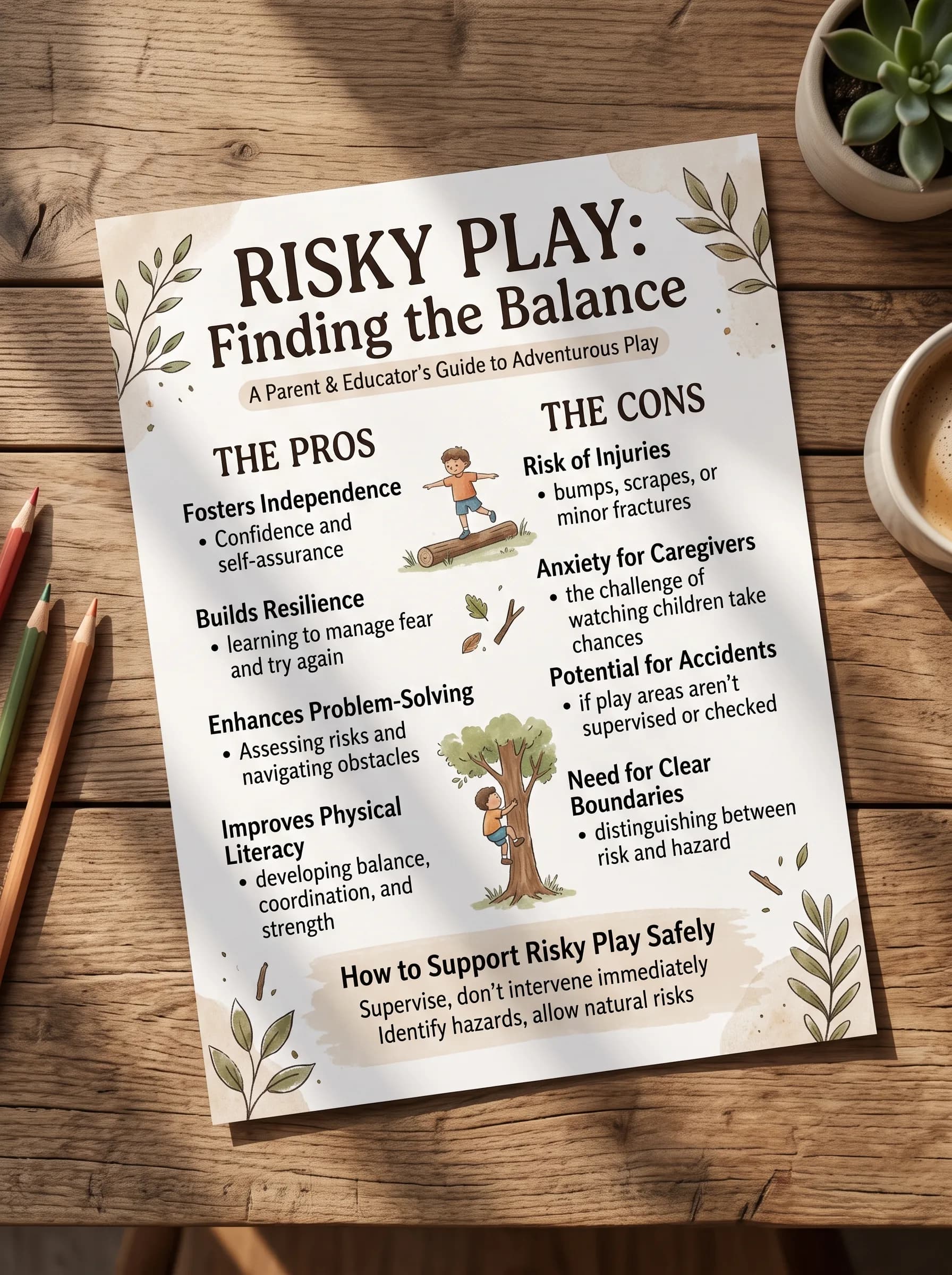
Discover how risky play can benefit children's development while weighing the potential risks involved. Learn about its impact on safety and growth.
In today's blog post, we will be discussing the topic of risky play. What are the pros and cons of risky play? Risky play involves activities that have a degree of risk of physical injury or danger, such as climbing, jumping, and exploring. While some parents may be hesitant to encourage this type of play, research has shown that it can benefit children's physical, emotional, and cognitive development. In this post, we will explore the pros and cons of risky play and provide some ideas for supporting this outdoor and indoor activity. Whether you're a parent, caregiver, or educator, we hope this post will provide useful insights and inspiration for promoting children's development through play.
While risky play has potential downsides, it offers many benefits for children's development. A safe environment encourages children to take risks, explore, and build life skills.
-
Provide a safe and supportive environment: Ensure outdoor play areas are free from hazards like sharp objects or uneven terrain. Use age-appropriate equipment and supervise as needed.
-
Encourage exploration: Take children on nature walks and let them climb rocks or logs.
-
Allow for risk-taking: Let children climb low tree branches or jump off small ledges.
-
Emotional Development: Taking risks helps children manage their safety. This builds a sense of control and boosts their confidence and self-esteem.
-
Set up a play space: Create a play area inside the home with soft materials like foam mats or pillows to cushion falls.
-
Provide age-appropriate equipment: Use items like balance beams or small climbing frames. Supervise children as they play.
-
Encourage imaginative play: Offer dress-up clothes, blocks, or boxes to spark creativity and experimentation.
-
Physical Injury: Risky play can lead to injuries like cuts, bruises, or broken bones. Always supervise children to minimise these risks.
-
Emotional Stress: Some children may feel stressed or scared during risky play. Encourage them gently and respect their comfort levels.
-
Conflict: Children may argue about what risks are acceptable. Teach them to communicate and compromise to resolve conflicts.
Understanding the benefits of risky play can help parents make informed decisions about encouraging such activities.
Risky play has some downsides, but it also offers many benefits. It supports children's physical, emotional, and cognitive growth. By providing a safe environment, we can encourage kids to explore and take risks. This helps them build important life skills.
-
Provide a safe environment: Ensure play areas are free from hazards like sharp objects. Use age-appropriate equipment and supervise as needed.
-
Encourage exploration: Take children on nature walks and let them climb rocks or logs.
-
Allow for risk-taking: Let children climb low tree branches or jump off small ledges.
-
Physical Development: Risky play helps children build motor skills, balance, and coordination.
-
Emotional Development: Taking risks boosts children's confidence and self-esteem as they learn to manage their safety.
-
Cognitive Development: Exploring and taking risks enhances problem-solving, creativity, and critical thinking.
-
Social Development: Risky play encourages cooperation and communication with peers while navigating challenges.
-
Set up a play space: Create a play area with soft materials like foam mats or pillows to cushion falls.
-
Provide age-appropriate equipment: Use items like balance beams or small climbing frames. Supervise children as they play.
-
Encourage imaginative play: Offer dress-up clothes, blocks, or boxes to spark creativity and experimentation.
-
Physical Injury: Risky play can lead to injuries like cuts, bruises, or even broken bones. Always supervise children to minimise these risks.
-
Emotional Stress: Some children may feel stressed or scared during risky play. Encourage them gently and respect their comfort levels.
-
Conflict: Children may argue about what risks are acceptable. Teach them to communicate and compromise to resolve conflicts.
Pros of Risky Play
-
Physical Development: Engaging in risky play can help children develop their gross motor skills, balance, coordination, and spatial awareness.
-
Emotional Development: Taking risks and learning to manage their safety can help children develop a sense of mastery and control over their environment, boosting their confidence and self-esteem.
-
Cognitive Development: By exploring and taking risks, children can develop problem-solving skills, creativity, and critical thinking.
-
Social Development: Risky play can encourage children to cooperate and communicate with their peers as they work together to navigate obstacles and manage risk.
Cons of Risky Play
-
Physical Injury: There is always a risk of physical injury when engaging in risky play, ranging from minor cuts and bruises to more serious injuries such as broken bones or concussions.
-
Emotional Stress: Some children may find risky play stressful or overwhelming, especially if they are hesitant or fearful of taking risks.
-
Conflict: Risky play can sometimes lead to conflicts between children, particularly if they have different ideas about what constitutes an acceptable level of risk.
Supporting Risky Play Outdoors
-
Provide a safe and supportive environment: Ensure outdoor play areas are free from obvious hazards, such as sharp objects or uneven terrain. Provide age-appropriate equipment and materials, and supervise children's play as needed.
-
Encourage exploration: Take children on nature walks and encourage them to explore their environment, such as climbing over rocks and logs.
-
Allow for risk-taking: Provide opportunities for children to take risks, such as climbing on a low tree branch or jumping off a small ledge.
Supporting Risky Play Indoors
-
Set up a play space: Create a designated play area inside the home with soft materials such as foam mats or pillows to cushion falls.
-
Provide age-appropriate equipment: Provide equipment such as balance beams, stepping stones, or a small climbing frame, and supervise children's play as needed.
-
Encourage imaginative play: Provide materials such as dress-up clothes, blocks, or cardboard boxes, which can encourage imaginative play and experimentation.
For more ideas on encouraging exploration, check out our article on Exploring the Wonders of Nature with your child.
To learn about the importance of free play, visit our post on The Importance of Free Play for Child Development.
In conclusion, while risky play may come with some potential downsides, it can also provide a number of benefits for children's physical, emotional, and cognitive development. Providing a safe and supportive environment encourages our children to take risks, explore their environment, and build important life skills.
Engaging in risky play benefits children by fostering resilience and adaptability, which are crucial for their overall growth.
Supporting Risky Play Indoors
For more ideas on encouraging exploration, check out our article on Exploring the Wonders of Nature with your child.
Supporting Risky Play Outdoors
For more thrilling activities, explore our 10 Thrilling Risky Play Activities for Kids.
Frequently Asked Questions
What are the benefits of risky play for children?+
Risky play helps children develop motor skills, confidence, problem-solving abilities, and social skills. It encourages exploration and resilience.
How can I ensure my child's safety during risky play?+
Ensure play areas are free from hazards, use age-appropriate equipment, and supervise children. Encourage them to communicate and respect their comfort levels.
Is risky play suitable for all children?+
While risky play can benefit most children, it's important to consider each child's comfort level and personality. Some may need more encouragement and support.
Illustrations created with AI image tools from our own prompts, curated and edited by our team. How we make things
Tags
Join our weekly newsletter
Framework-grounded ideas for parents and educators, every Thursday.