Child Development
Teaching Turn-Taking to Young Children
Growing Bright Minds3 min read
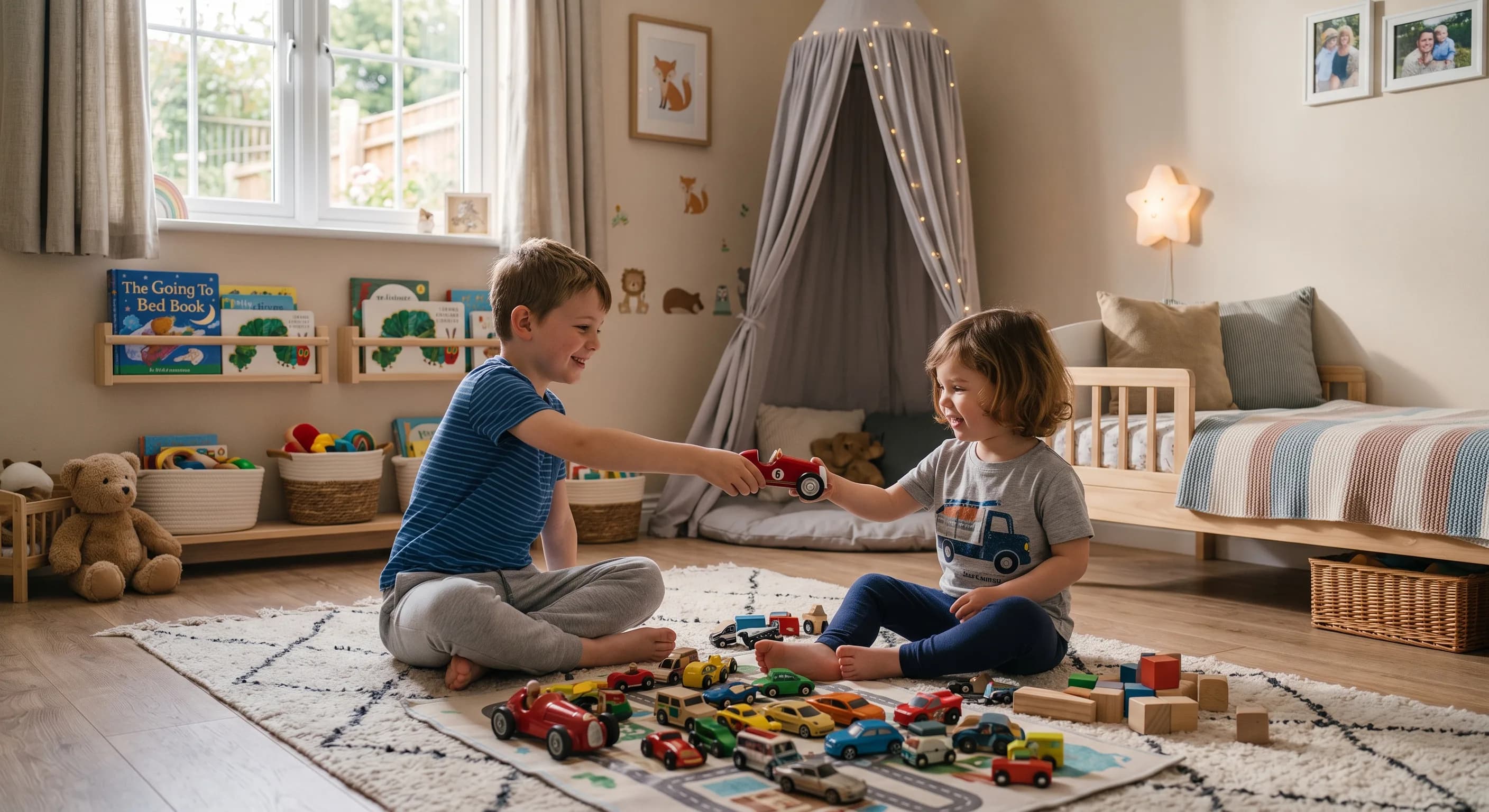
Learn why young children struggle with sharing and discover effective strategies for teaching turn-taking to enhance their social skills.
Did you know that simple turn-taking activities can do wonders for your child's fine motor skills? Whether it's passing a ball or taking turns with a crayon, these activities are more than just fun; they're foundational for physical development.
Have you ever found yourself mediating a toy dispute between your kids? One minute they're giggling, and the next, they're arguing over who gets the toy. It can be exhausting, especially when you're juggling other tasks. Understanding why sharing is tough for young children and teaching them turn-taking instead can ease these moments.
The Challenge of Sharing
Young children often struggle with sharing because they don't yet grasp the concept of others' perspectives or time. They see a toy and think, "I want it now," without considering that another child might feel the same way. This is perfectly normal developmentally. Most children begin to understand sharing around ages 3.5 to 4, but even then, it's not always easy.
Sharing often feels like a forced action to them. For many kids, their toys are like our personal gadgets; we wouldn't always want to hand over our phones or laptops. This means when we insist they share, we might be asking more than they're ready to give. Instead, focusing on turn-taking can help them learn cooperation at their own pace.
Benefits of Turn-Taking
Turn-taking is a fantastic alternative to sharing. It teaches children patience and fairness without the stress of immediate sacrifice. When kids take turns, they learn to wait and understand that they'll get their chance. This approach respects their need for ownership while gently guiding them toward cooperation.
Start by modelling turn-taking in everyday situations. You can say, "It's your brother's turn to play with the train. When he's done, it'll be your turn." This method helps them see fairness in action and builds trust that they'll get their opportunity soon.
Encouraging Turn-Taking at Home
To encourage turn-taking, set clear family rules that align with your values. Decide which items must be shared and which ones are personal. For shared items, introduce a timer to signal when it's time to switch turns. Short initial turns can help ease them into this new practice without overwhelming them.
Praise is also crucial. When you notice your child successfully taking turns, acknowledge their efforts. Positive reinforcement makes them more likely to repeat the behaviour. Remember, practice makes perfect. With time, they'll become more comfortable and cooperative in these interactions.
For more tips on nurturing cooperative play, check out our article on Building Confidence with Constructive Play.
Turn-Taking in Social Settings
As your child grows, they'll start having playdates or attending preschool, where turn-taking becomes even more vital. Encourage them to use phrases like "Can I have a turn?" or "Let's switch now." These polite requests foster communication and help avoid conflicts.
When disputes arise, guide them to negotiate or find alternative solutions. A simple, "How about we play together?" can turn a potential conflict into a cooperative experience. These skills not only help with sharing but also in forming friendships and learning empathy.
Teaching turn-taking not only reduces stress over sharing but also equips your child with essential social skills. By practising patience and understanding, they learn to navigate social interactions more smoothly.
Ultimately, the goal is to make sharing and turn-taking a natural and positive part of their playtime, leading to more harmonious and enjoyable experiences for everyone.
For more ideas on how to engage your child in meaningful play, check out our articles on Montessori Sensory Activities: Key Benefits and Building Confidence with Constructive Play.
Frequently Asked Questions
Why do young children struggle with sharing?+
Young children struggle with sharing because they haven't yet developed the ability to understand others' perspectives or the concept of time.
How can I encourage my child to take turns?+
Model turn-taking in everyday situations, use timers for shared toys, and praise your child when they successfully take turns.
How does turn-taking help with fine motor skills?+
Turn-taking encourages children to engage in activities that require precision and coordination, which are key components of fine motor development.
Tags
Join our weekly newsletter
Framework-grounded ideas for parents and educators, every Thursday.